-


-


-


-


whatsapp

-
WeChat


FV Series Medium Efficiency Filters: A Cost-Effective Solution for Upgrading Industrial Purification Systems
2026-05-18
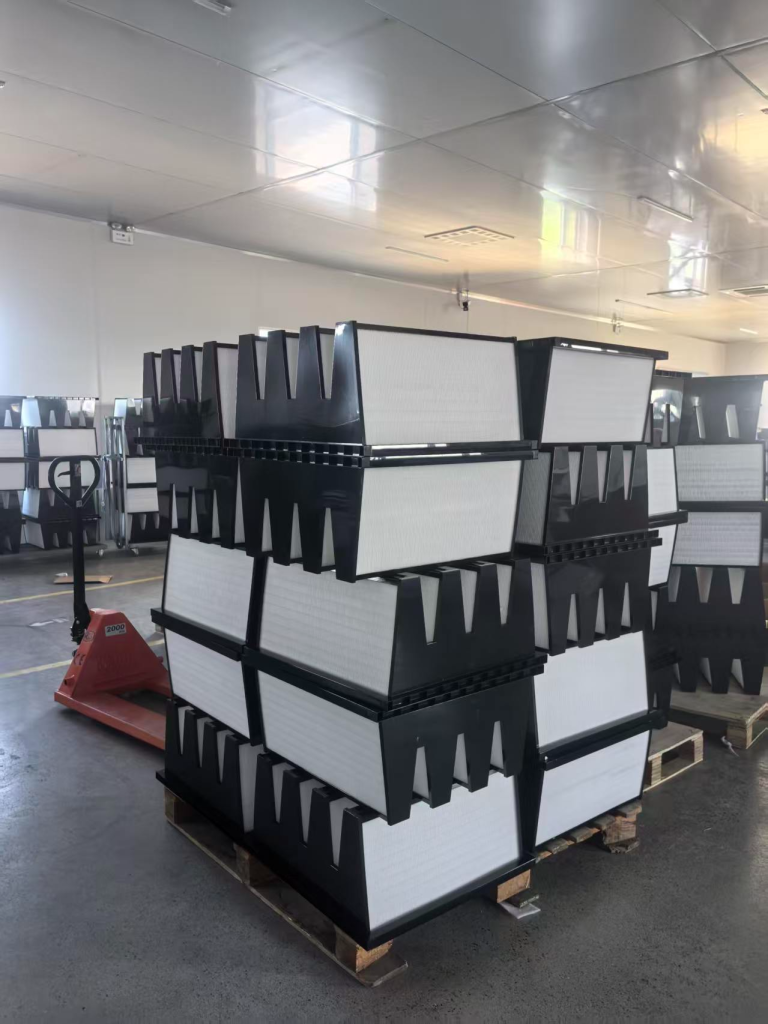
Serial medium-efficiency filters type FV have a V-shaped housing design, providing high dust capacity and low air flow resistance; They are ideal for industrial facilities and large-scale air conditioning systems.
In air purification systems in industrial facilities, data centers and large commercial HVAC (heating, ventilation and air conditioning) systems, the FV sub-HEPA filter acts as a critical link between medium and high efficiency filtration stages. Its performance directly affects both the service life of subsequent HEPA filters and the overall operating costs of the entire system. Being an intermediate filter element located between the medium and high efficiency stages, it by no means serves as an “inferior” replacement; rather, it is a system solution that provides the optimal balance between filtration efficiency, dust holding capacity and airflow resistance - a solution that can significantly reduce customers' long-term operating and maintenance costs in most application scenarios.
I. Key technologies and industry standards: more than just “increasing efficiency”
Medium efficiency filter type FV Its design strictly complies with the industry standard "Air Filters" (GB/T 14295), and the key advantages are manifested in three main aspects:
**Filtration Efficiency:** Using composite fiberglass filter material, the filtration grade reaches H10-H12 levels. The filter demonstrates consistently high efficiency in capturing particles larger than 0.3 microns, effectively retaining the vast majority of suspended solids and aerosols, which can significantly reduce the load on subsequent stages of high-efficiency filtration.
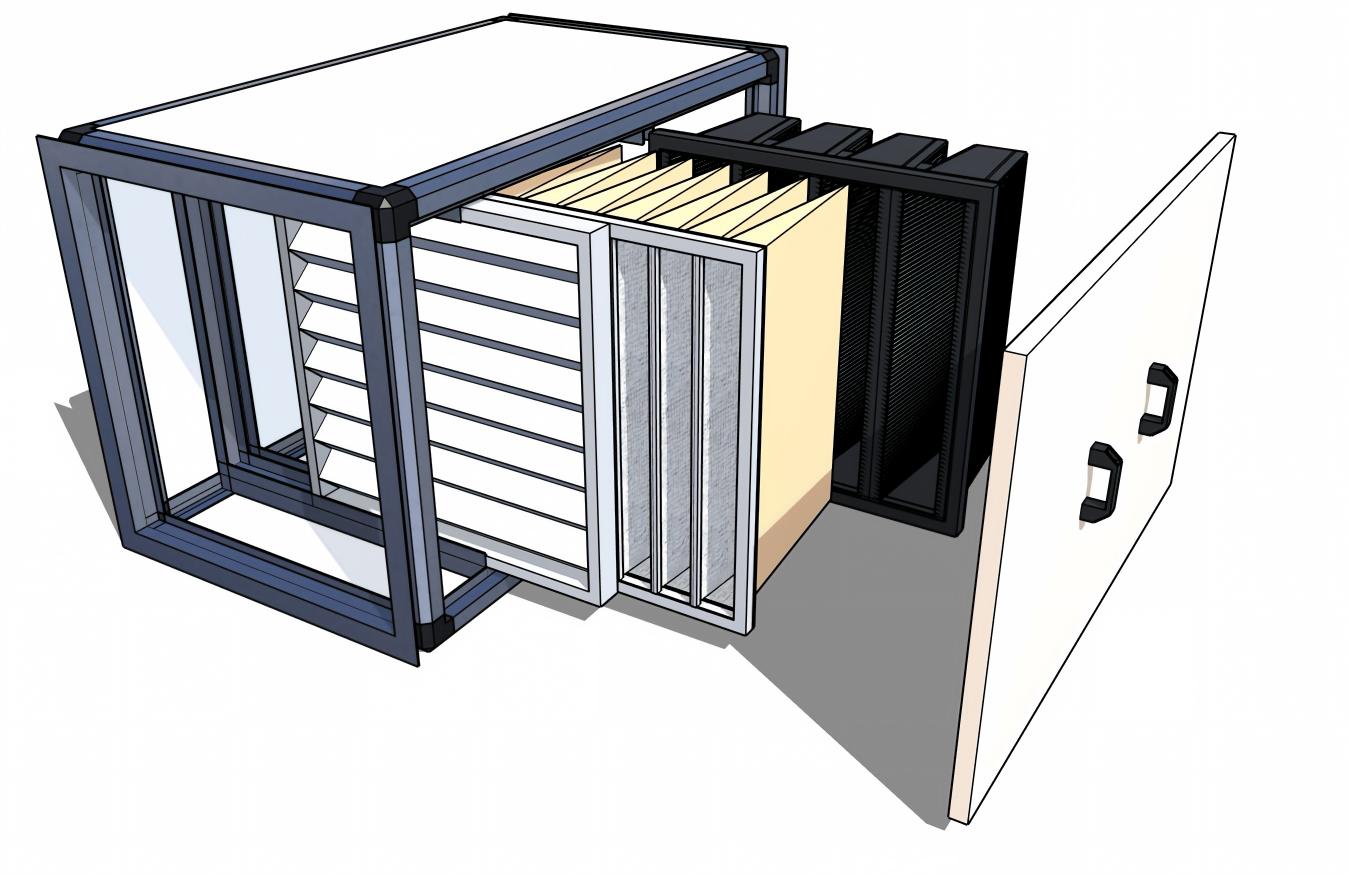
**Low resistance and high dust holding capacity:** Thanks to the V-shaped filter housing design, the filter provides a significant increase in the effective area of the filter material. It is characterized by low initial resistance at rated air flow volumes, and its dust holding capacity significantly exceeds that of traditional panel filters. This allows you to significantly increase replacement intervals and reduce the frequency of downtime associated with maintenance.
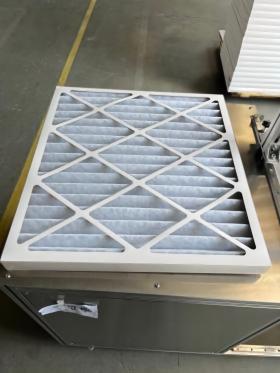
**Structural Compatibility:** Designed with an ABS or galvanized steel frame combined with a V-shaped filter media, this filter is a direct plug-and-play replacement for medium efficiency or Sub-HEPA filters of similar size. It is compatible with the vast majority of AHUs and air handling units without requiring any additional equipment modifications.
**II. Application Value: Solving Three Key Customer Problems**
**Frequent clogging of high efficiency filters:** In environments with high concentrations of dust and particulate matter, direct use of high efficiency filters often places excessive load on the inlet stage, causing a rapid increase in airflow resistance and a sharp reduction in filter life within a short time. Using a Sub-HEPA V-filter (type FV) as an intermediate barrier captures the bulk of fine particles, thereby extending the life of subsequent high-efficiency filters by more than 50% and significantly reducing replacement costs.
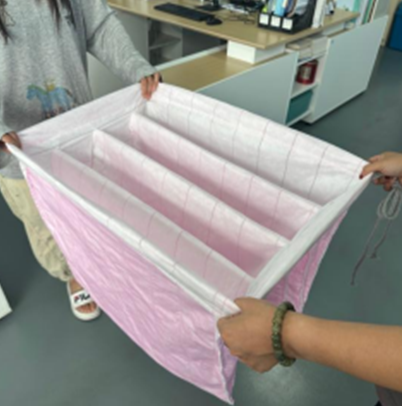
**Excessive system airflow resistance and high power consumption:** Traditional mid-efficiency pocket filters exhibit a rapid increase in airflow resistance in high-volume air environments, resulting in a corresponding increase in fan power consumption. The Sub-HEPA filter's V-shaped design (FV type) allows it to maintain low operating resistance while maintaining high filtration efficiency, thereby helping customers reduce long-term energy operating costs for HVAC (heating, ventilation and air conditioning) systems. **Maintenance and Replacement Issues that Disrupt Production:** Compact box design allows for easy installation and disassembly, requiring no specialized tools and allowing replacement to be completed by just one person. Additionally, the integrated design of the filter media and housing eliminates the risk of rupture or displacement of filter bags—common problems with traditional baghouse filters—thereby minimizing the potential for secondary contamination and personnel hazards during maintenance. III. Practical recommendations for selection, operation and maintenance
**Model Selection:** The appropriate model should be selected based on the volume of air flow in the system, the efficiency class of subsequent HEPA filters, and the dust concentration at the installation site. For environments with a high dust load, it is recommended to give preference to FV type filters, which have a high dust capacity; this allows you to increase the intervals between filter replacements.
**Installation Features:** When installing, you must make sure that the filter forms a tight connection with the landing frame, eliminating any gaps and air leaks. After installation is completed, a differential pressure gauge should be used to monitor the change in air flow resistance; the filter must be replaced immediately as soon as its resistance exceeds twice the initial resistance.
**Application Areas:** Widely used in electronics manufacturing, pharmaceutical manufacturing, data centers, and HVAC systems in large commercial buildings. They are particularly suitable for use as pre-filters to protect downstream HEPA filters, or where moderate levels of air cleanliness are required and cost-effectiveness is a priority.
**Conclusion**
Medium efficiency filter type FVFar from being just an “auxiliary element” in a filtration system, it serves as a critical link in balancing filtration efficiency, operating costs and equipment longevity. Selecting products that meet regulatory requirements and are compatible with the system not only helps meet current cleaning needs, but also provides the customer with long-term cost savings and operational stability by reducing energy consumption and extending the life of downstream equipment.