-


-


-


-


whatsapp

-
WeChat


In 2026, the industrial air filtration industry will undergo a transformation, with stricter policies driving technological upgrading and domestically produced products adapting to all scenarios.
2026-04-13
Since 2026, China's industrial air filtration industry has undergone a triple transformation in policy, technology and market. Authoritative departments such as the Ministry of Ecology and Environment have issued a number of strict new regulations. Combined with the development of smart technologies and increasing demands for high-tech manufacturing, the industry is transforming from “highly regulated” to “precise, efficient, energy-saving and low-carbon.” This article integrates key information from the Ministry of Ecology and Environment, industry analysis reports and reputable research institutes. Adapted to the SEO needs of Russian websites, the article includes keywords and long-tail keywords. The original revised version is in Chinese only, striking a balance between industry professionalism and product consistency. All content is protected by copyright and appropriate data sources are clearly identified. Key SEO keywords: industrial air filtration, industrial air filters, household industrial filters, high efficiency industrial filters; Long-tail keywords: purchasing industrial air filters in Russia, prices for ULPA filters in the electronics industry, filters for metallurgical plants, intelligent air filtration systems for workshops.
Tighter policies: new rules force industrial production to modernize, compliance thresholds are raised across the board
Beginning in March 2026, several new key regulations in the field of industrial air filtration officially came into force in China, completely destroying the previous broad model of “equipment installation equals compliance.” According to the latest regulations issued by the Ministry of Ecology and Environment, industrial filters must meet three main stringent indicators: an average service life of at least 24 months and a reduction in filtration efficiency of no more than 5% after 3000 hours of continuous operation. Filtration accuracy, life degradation rate and regeneration power consumption have been officially included as mandatory testing items. Meanwhile, the Ambient Air Quality Standard (2026 Revision), which went into effect on March 1, lowered the annual average secondary limit for PM2.5 from 35 µg/m³ to 25 µg/m³, required industrial waste gas treatment systems to have higher interception accuracy, and further tightened the dust emission limit in key areas to ≤10 mg/Nm³. These requirements apply not only to the domestic market, but also to Russian companies planning to import highly efficient industrial filters and comply with international environmental safety standards.
These coordinated efforts at the policy level are taking the industry to a new stage of “improving quality and efficiency.” The 2026 Continuous Air Quality Action Plan will be fully implemented, requiring key industries to simultaneously equip VOC treatment plants with high-precision particulate and gaseous pollutant co-treatment modules, directly resulting in a 12.3% increase in average unit price per equipment. Meanwhile, the mandatory implementation of GB/T 43287-2025, Energy Efficiency Limits and Energy Efficiency Classes for Industrial Air Treatment Equipment, sets a three-level energy efficiency threshold that is expected to accelerate the retirement of approximately 23% of inefficient existing equipment and deliver an average 19.4% improvement in energy efficiency across the industry. Against this backdrop, proactively upgrading industrial air filters and selecting high-efficiency, standards-compliant products has become a key focus for businesses to reduce political risk and achieve greener production. This is especially important for Russian metallurgical, chemical and electronics companies seeking reliable domestically produced industrial filters.
Technology and market: Intelligent iteration + scaling up, advantages of domestic products
In terms of technology trends, in 2026, the industrial air filtration industry will exhibit three main characteristics: "intelligentization, high efficiency and multi-functionality." Smart air filtration systems have become mainstream in the industry. The devices, equipped with high-precision laser sensors, can monitor seven parameters in real time, including PM2.5, formaldehyde and TVOC. Using artificial intelligence, they optimize filtration efficiency and perform predictive maintenance, creating a dynamic closed-loop air control system. This is extremely important for Russian enterprises that require intelligent air filtration systems in their workshops, effectively reducing maintenance costs and increasing operational stability. The widespread application of nanofiber filter materials has achieved the double breakthrough of “high filtration efficiency + low air flow resistance”, meeting the requirements of harsh industrial environments such as high temperatures and high dust levels. Specially designed for metallurgical plants, these filters are well suited for the production environment of Russian metallurgical enterprises.
The market size continues to grow steadily, and the competitiveness of domestic industrial filters has increased significantly. According to Fortune Business Insights, the global air filter market reached US$17.08 billion in 2025 and is projected to grow to US$34.66 billion by 2034, representing a CAGR of 8.30% from 2026 to 2034. The Chinese market, the core of growth in the Asia-Pacific region, is projected to reach US$11.979 billion in 2026, growing at 8.9% year-on-year. Emerging areas such as photovoltaics and semiconductors are driving demand for high-efficiency industrial filters, with sales in this segment expected to grow 36.1% year-on-year. It is noteworthy that domestic filter manufacturers have achieved mass production of ULPA class filters. ULPA filters in the electronics industry are 23.6% cheaper than imported analogues, which increases the market share of domestic industrial filters from 41.2% in 2025 to approximately 47.6% in 2026, providing a partial replacement for imported brands. This is a significant advantage for companies planning to purchase industrial air filters in Russia. The continuing growth in demand in the Russian market for industrial air filters opens up wide opportunities for domestic production.
Adapt to different scenarios: accurately identify enterprise needs for products that meet both compliance and efficiency requirements
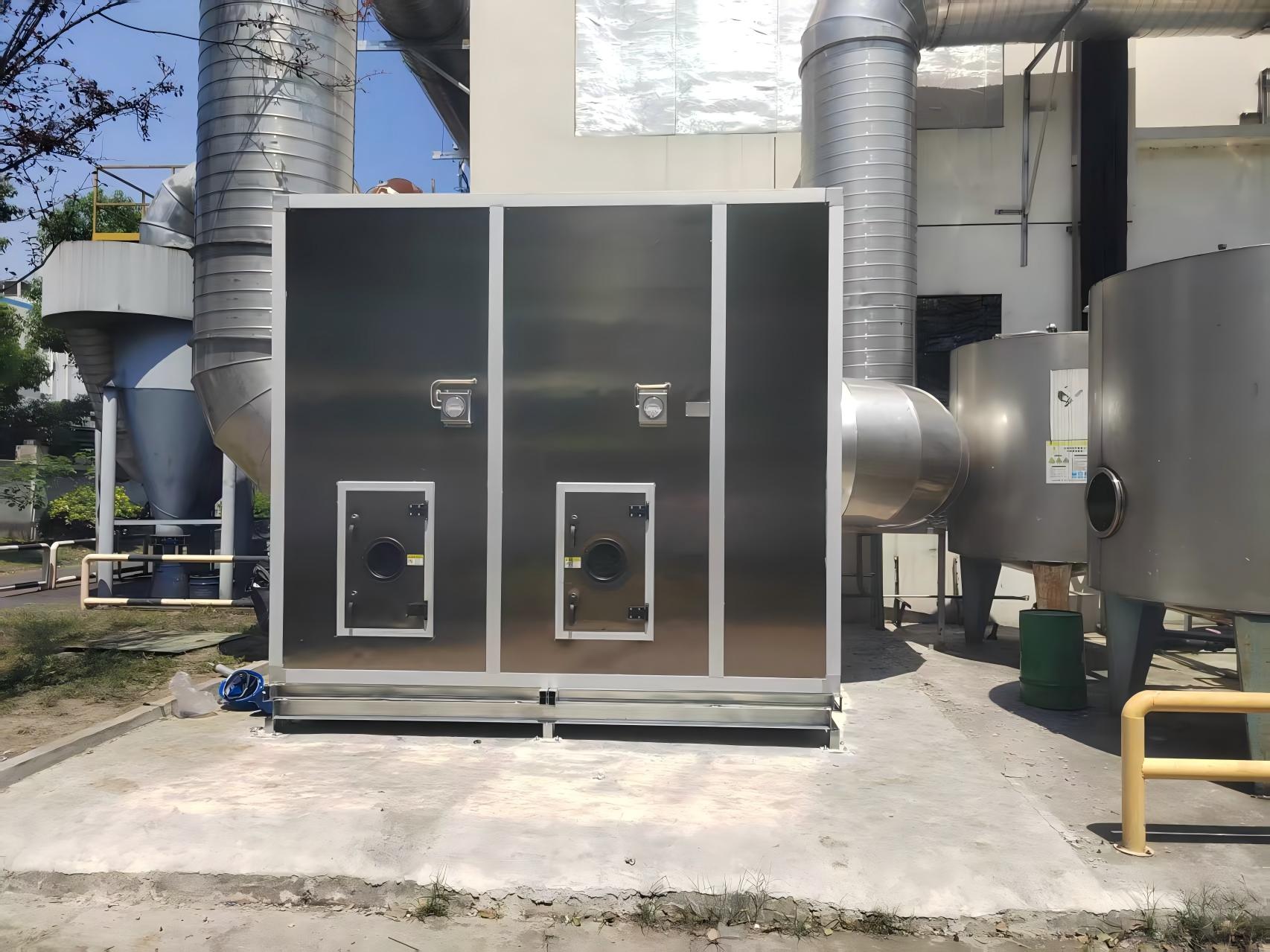
Amid industry transformation, the company uses advanced technology and strict quality control to launch industrial air filters that adapt to various scenarios. These products precisely meet the compliance requirements and production needs of various industries, achieving the main goals of “on-demand cleaning, high efficiency and stability, and energy saving and consumption reduction.”
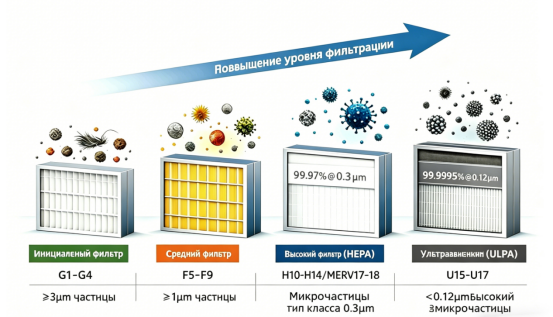
In applications with extremely high cleanliness requirements, such as electronics, semiconductors and biopharmaceuticals, the company's Ultra High Efficiency ULPA Air Filter delivers 99.9995% filtration efficiency, accurately capturing fine dust and aerosols larger than 0.12 microns. It fully complies with GMP standards and cleanroom requirements for IC lithography and sterile workshops, effectively preventing dust damage and contamination of products, increasing product yield, and is suitable for Russian enterprises requiring ULPA filters in the electronics industry. For highly contaminated environments such as automotive painting and metallurgy, industrial baghouse air filters with high dust holding capacity and long service life effectively capture contaminants such as welding fumes and paint mist. The reduction in efficiency does not exceed 3% after 3000 hours of continuous operation, which significantly exceeds new standards, while simultaneously reducing equipment maintenance costs. This makes it the preferred choice for specialized filters in Russian metallurgical plants. In special operating environments such as the new energy and chemical industries, corrosion-resistant air filters use fluorocarbon-coated metal frames and hydrolysis-resistant filter materials, allowing them to withstand high humidity and corrosive environments. They are suitable for scenarios such as lithium battery coating and chemical waste gas purification, ensuring safe and stable operation of production equipment.
In addition, the company's smart air filtration system integrates IoT monitoring and AI-powered management and maintenance functions. This allows for remote monitoring of filter status, replacement alerts, and overall system collaboration. It is suitable for scenarios with high stability requirements, such as data centers and precision processing, helping companies implement digital control of their filtration systems, further reducing energy consumption and labor costs, helping to achieve carbon reduction goals and ideally meeting the needs of Russian companies for smart air filtration systems in their workshops.